

This aircraft flew 3,199 miles across the US without a pilot flying it
Joby Aviation completes first autonomous flight across America with Cessna Caravan
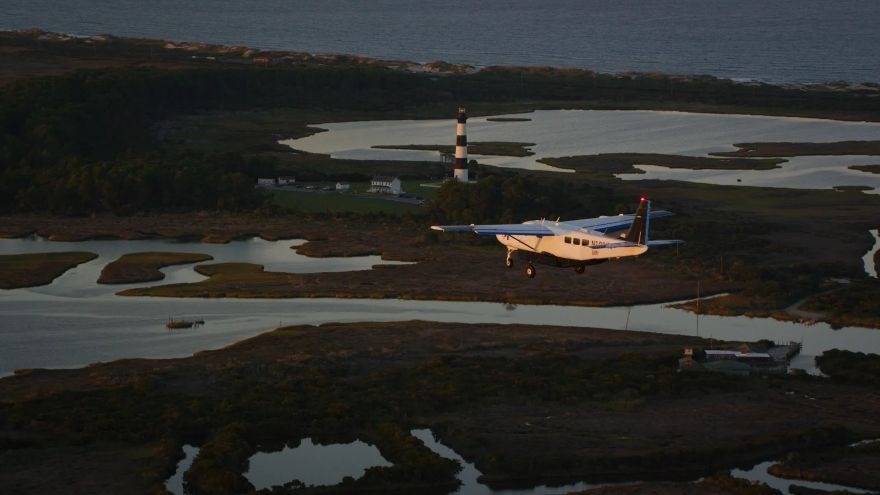
DUBAI – A converted Cessna Caravan has completed a 3,199-mile journey across the United States without any control input from the safety pilot onboard, in a milestone announced by Joby Aviation.
The aircraft travelled from Concord, California, to Dare County Regional Airport in North Carolina’s Outer Banks, carrying out taxiing, take-off, navigation and landing autonomously. Joby said the eastbound leg, completed on September 14, marked the first autonomous flight across the US of its kind.
The aircraft began its journey on September 7 as part of Joby’s month-long Electric Skies tour, covering 3,199 miles (5,148 kilometres) across the country. Although a safety pilot was seated in the aircraft, Joby said there were zero control inputs from the pilot throughout the eastbound journey.
The aircraft was remotely supervised from Joby’s Autonomy Headquarters in California and from Shaw Air Force Base in South Carolina, with supervision possible from as far as 2,323 miles away.
Route across US
The aircraft, known as the J208, is a converted Cessna 208B Grand Caravan rather than the electric vertical take-off and landing aircraft for which Joby is best known.
The eastbound route began at Buchanan Field Airport in Concord, California, before continuing through Phoenix Deer Valley Airport in Arizona, Fort Worth Alliance Airport in Texas and Shaw Air Force Base in South Carolina. The final leg brought the aircraft to Dare County Regional Airport in the Outer Banks of North Carolina, close to Kitty Hawk, where the Wright brothers made their historic powered flight in 1903.
During the journey, the aircraft demonstrated autonomous operations in different environments. Joby said it was able to alter its mission plan around changing weather conditions and thunderstorms, while also integrating into the busy airspace at Phoenix Deer Valley Airport.
The aircraft also made a low pass near the Wright Brothers National Memorial before landing in the Outer Banks, adding a historic aviation backdrop to the demonstration.
Remote supervision
The achievement does not mean the aircraft operated without human oversight. A safety pilot remained onboard, while remote teams monitored the aircraft during the flight.
Joby said the autonomy system has already accumulated more than 400 flights and 800 automated flight hours in controlled and uncontrolled airspace. The technology came from the autonomy division of Xwing, which Joby acquired in 2024.
The company has also tested the technology in US military exercises, including Agile Flag and REFORPAC. Joby says the system is being developed for applications including commercial freight, medical transport, emergency response and defence logistics.
Joby founder and chief executive JoeBen Bevirt said the cross-country journey offered a glimpse into a new era of aviation, highlighting potential uses for connecting remote communities, delivering critical supplies, responding to disasters and supporting military operations.
Heading west
The autonomous aircraft is now scheduled to begin its return journey to California, with planned stops including Raleigh, Fredericksburg and Washington, DC, followed by Louisville, Wichita, Oklahoma City, Salt Lake City and Portland.
Joby has positioned the wider tour as a demonstration of autonomous aviation across different environments and missions, while its electric air taxi programme continues separately. The company says the autonomous Cessna platform provides another potential route into cargo and logistics operations as it develops its broader aviation technology.